Termite Control Services in Thane by Verified Professionals
Termite control in Thane from Rs 2,299. Soil treatment, wood treatment and anti-termite drilling, CIB-approved chemicals, verified professionals, fixed quote before work begins.
Select Termite Control and confirm your service requirements.
Step 2: Verify Your Details
Enter your name, phone number, and preferred service schedule.
Step 3: Get a Verified Professional
We assign a trusted and background-verified professional near you.
Step 4: Pay Securely After Service
Make secure payment after successful service completion.
WHY PROEAZY
Why Choose ProEazy for Termite Control in Thane
Verified professionals, transparent pricing, and reliable
termite control services across Thane.
Verified Professionals
Aadhaar ID verification, skill assessment, and genuine customer ratings ensure trusted service professionals.
On-Time Service
Get timely service updates and dependable professionals who arrive as scheduled.
Secure Payments
Pay safely using UPI, cards, net banking, or wallets with encrypted payment processing.
Quality Assurance
Customer satisfaction comes first with reliable service quality and professional support.
Customer Reviews — Termite Control in Thane
Verified reviews from customers who booked
termite control services in Thane
G
Ganesh S
★
★
★
★
★
Pre-renovation termite control done on our 1BHK in Naupada before new flooring was installed. The team treated all wall-floor junctions and door frames thoroughly. Explained the warranty period and what to monitor after termite control treatment. Transparent pricing throughout
Top Review
V
Varsha K
★
★
★
★
★
3BHK in Hiranandani Estate with termite activity along the wall-floor junction near the balcony. The SGNP forest-edge soil moisture had been sustaining the colony. ProEazy's termite control team completed the full treatment including wood treatment on affected areas and drilling at all junction points. Quote matched billing exactly.
M
Mahesh R.
★
★
★
★
★
Noticed mud tubes along the skirting boards and damage on the door frame of our 2BHK on Ghodbunder Road. ProEazy's termite control team did the full anti-termite drilling and soil treatment, explained the process at every stage, and confirmed the post-treatment precautions clearly. Confirmed price before they started, nothing added after
FAQs About Termite Control in Thane
Find answers to common questions about
termite control services in Thane.
Is termite control recommended before renovation in Thane?
Yes, strongly. Pre-renovation termite control is particularly recommended in Thane for ground-floor and first-floor flats in SGNP-adjacent zones and for older construction in Naupada, Kopri, and Wagle Estate where the original wall-floor junctions have never been treated. Once new flooring is installed over the original slab, the wall-floor junction drilling points essential for complete subterranean termite soil treatment are no longer accessible without disturbing the new floor. Pre-renovation termite control is the most complete treatment window for Thane homes.
What are the signs of termite infestation in a Thane home?
Mud tubes running along skirting boards, wall-floor junctions, or up wall surfaces are the most visible sign of subterranean termite activity. Hollow-sounding wood when tapped, blistering or darkening of wood surfaces, and discarded wings near windows after the monsoon indicate drywood or swarmer termite activity. Fine powdery frass below furniture or door frames indicates active drywood termite infestation. In Thane's SGNP-adjacent buildings, mud tubes running along the wall base adjacent to the external wall are a consistent first sign of subterranean termite entry from the forest-edge soil.
How long does termite treatment last in Thane?
A professionally applied termite control treatment in Thane provides protection for 3 to 5 years depending on the termiticide used, the thoroughness of the drilling and injection coverage, and the specific termite pressure in your zone. Thane's SGNP forest-edge soil moisture and the Ulhas River drainage system create sustained subterranean termite pressure in the western and eastern residential zones respectively, making the annual inspection recommendation more important in Thane than in drier inland Maharashtra cities.
Are the termite control professionals in Thane verified?
Every ProEazy professional completes Aadhaar ID verification, PAN verification, and a 3-stage skill assessment before they are permitted to take termite control bookings in Thane. Anti-termite drilling involves penetrating the wall-floor junction and injecting chemical under pressure into the structure of your home. Every person the team sends is verified and specifically trained for the termite control service before they are permitted on any booking.
How long does termite control treatment take in Thane?
A 1BHK takes approximately 2 to 3 hours. A 2BHK takes 3 to 4 hours. A 3BHK takes 4 to 5 hours. Duration depends on the extent of termite infestation, the number of drilling points required at wall-floor junctions and door frames, and whether wood treatment is required on affected elements. In Thane's older construction in Naupada and Kopri with original wooden door frames and more extensive structural gaps, the termite control treatment time extends toward the upper range.
What termite species does the termite control service in Thane target?
Termite control in Thane targets both subterranean termites and drywood termites. Subterranean termites are the dominant species in Thane residential buildings, entering through soil contact at wall-floor junctions, through the Ulhas River drainage connections in eastern Thane, and through the SGNP forest-edge soil in the western corridor. Drywood termites infest dry wood in furniture, door frames, and window frames. The termite control treatment protocol is confirmed based on the species identified during the pre-treatment inspection.
What treatment method is used for termite control in Thane?
Termite control in Thane uses a combination of anti-termite drilling, soil treatment, and wood treatment. Drilling is done at wall-floor junctions, around door and window frames, and at other identified entry points. CIB-approved non-repellent termiticide is injected into the drilled holes to create a chemical barrier in the soil and structure. Affected wood surfaces receive direct wood treatment. All drill holes are sealed with cement before the termite control team leaves.
How much does termite control cost in Thane?
Termite control in Thane costs Rs 2,299 to Rs 3,599 for a 1BHK, Rs 5,299 to Rs 5,599 for a 2BHK, and Rs 5,299 to Rs 6,599 for a 3BHK. The final price within the range is confirmed after the team lead assesses the premises, identifies the termite species and infestation extent, and determines the drilling and treatment points required before the termite control service begins. No additions are made after work starts.
Why Thane Faces One of Maharashtra's Most Sustained Termite Pressures
Termite control in Thane addresses a subterranean termite environment that is more persistent and structurally embedded than in most comparable Maharashtra cities, and the reasons are specific to Thane's unique combination of forest-edge geography, river drainage infrastructure, and construction history.
The SGNP forest-edge soil is the most significant driver of termite control demand in Thane's western residential corridor. The Sanjay Gandhi National Park's forest floor maintains a soil profile that is rich in the organic material and sustained moisture that subterranean termite colonies require to establish and sustain large populations. The soil at the SGNP boundary, which runs immediately adjacent to residential buildings in Brahmand, Hiranandani Estate, and Kolshet on Ghodbunder Road, contains established subterranean termite colonies that have existed in the forest soil for decades. Unlike termite colonies in purely urban soil environments that are established opportunistically when conditions allow, the SGNP boundary colonies are permanent features of the forest floor ecosystem. They forage into residential buildings through the wall-floor junction soil contact, under-door gaps at ground level, and utility pipe penetrations in ground-floor slabs. Termite control in these forest-edge zones requires a more thorough soil treatment saturation and more frequent post-treatment inspection than termite control in standard urban residential environments without permanent adjacent forest termite habitat.
The Yeoor Hills sustained soil moisture amplifies this forest-edge termite pressure. Subterranean termite colonies require soil moisture at the colony level to maintain worker health and activity. The Yeoor Hills forest cover releases atmospheric moisture through transpiration year-round, and the soil in the residential zones below the hills — Majiwada, Manpada, and the northern Ghodbunder Road corridor — retains moisture from this forest cover effect at a level that sustains subterranean termite colony activity through Thane's dry season months. This sustained soil moisture means that termite control in Thane's Yeoor Hills-adjacent zones cannot rely on the natural dry-season reduction in termite activity that provides a degree of natural control in drier inland Maharashtra environments.
The Ulhas River drainage system provides the subterranean termite entry pathway specific to termite control in Thane's eastern and central residential zones. The drainage infrastructure connecting Thane's established residential zones of Naupada, Kopri, and Wagle Estate to the Ulhas River creates a network of below-ground channels where soil moisture is maintained year-round by proximity to the river water table. Subterranean termite colonies established in the moist soil adjacent to these drainage channels access residential buildings through the same utility pipe penetrations and floor slab gaps that provide the entry pathway for Norway rats in these zones. Termite control in Naupada, Kopri, and the Wagle Estate-adjacent residential areas must address the drainage-adjacent soil treatment as a specific component of the service.
Thane's construction history adds a wood vulnerability dimension that is specific to the city's termite control profile. The residential zones of Naupada, Kopri, Khopat, and Wagle Estate contain a significant stock of construction from the 1970s, 1980s, and 1990s where original wooden door frames, window frames, and in some buildings original wooden floor joists were installed. These wooden elements, which are now 30 to 50 years old and have been exposed to Thane's sustained humidity from both the Yeoor Hills and the Ulhas River proximity, have in many cases softened to a degree that makes them highly susceptible to both subterranean and drywood termite attack. Termite control in these older Thane buildings frequently involves more extensive wood treatment than in newer construction because the wooden elements have been compromised by decades of humidity exposure before the termite colony established.
What the Professional Termite Control Service in Thane Covers
Pre-Treatment Inspection: The team lead conducts a thorough inspection of the premises before any termite control drilling or chemical application begins. All skirting boards, wall-floor junctions, door and window frames, cabinet bases, and wooden elements are inspected for mud tubes, exit holes, frass, and hollow-sounding surfaces. In Thane's SGNP-adjacent buildings, the external wall base and the ground-floor wall-floor junction adjacent to the forest-facing external wall are given specific inspection attention as the primary subterranean termite entry points from the forest-edge soil. In Ulhas River drainage-connected buildings in Naupada and Kopri, the drainage pipe penetrations are assessed as a secondary entry pathway. In older Thane construction, original wooden elements are assessed for the moisture-softening that indicates advanced drywood termite vulnerability. The inspection maps the infestation extent and species before the termite control treatment plan is confirmed.
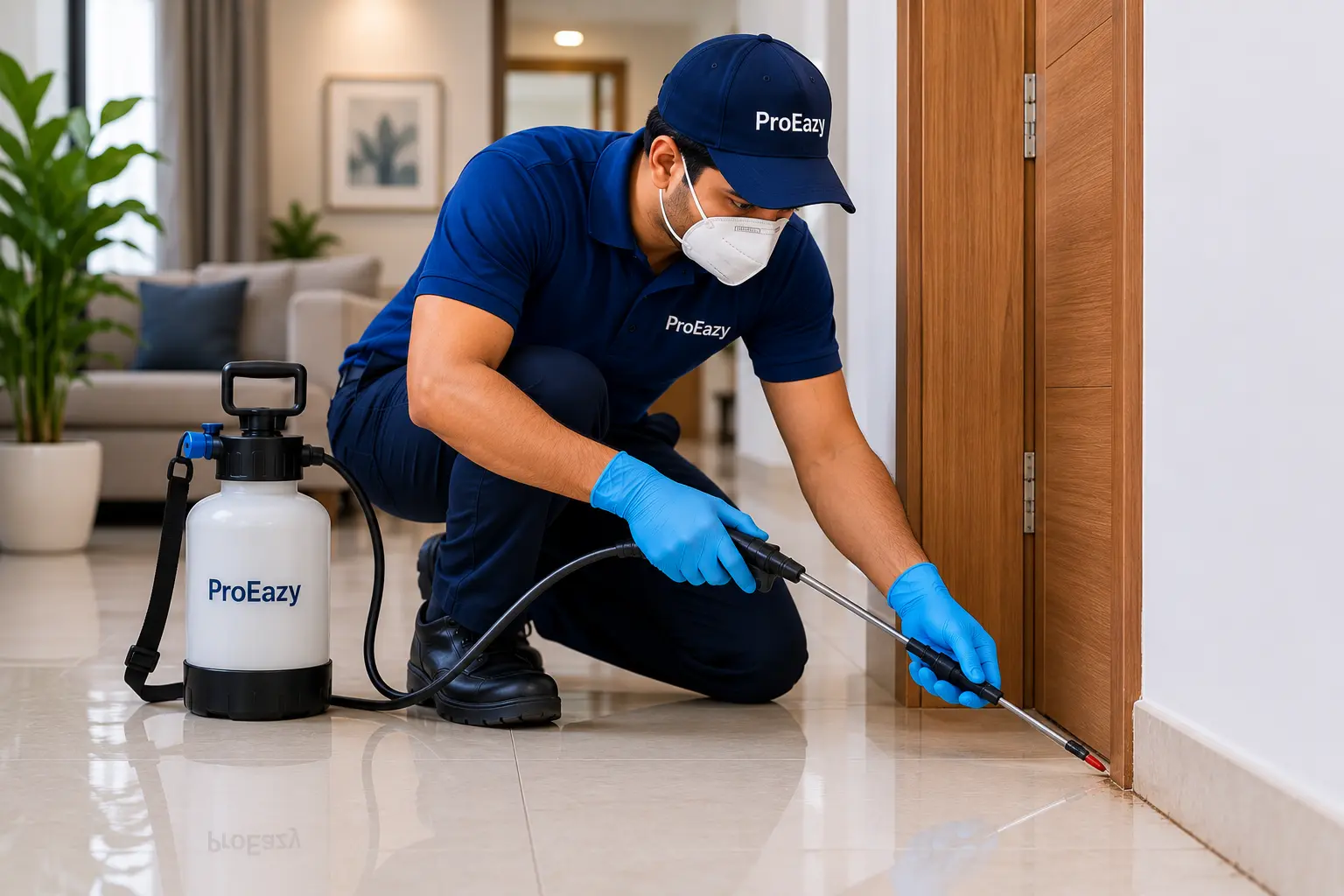
Anti-Termite Drilling: Holes are drilled at wall-floor junctions throughout the premises at regular intervals to create injection points for the termiticide into the soil and structural layer beneath the floor. Additional drilling is done around door frames, window frames, and any other structural entry points identified during the inspection. In Thane's SGNP-adjacent buildings, the external wall-floor junction on the forest-facing side receives additional drilling density to saturate the soil layer that is in direct contact with the forest-edge termite habitat. All drill holes are sealed with cement after injection as a standard part of the termite control service.
Soil Treatment: CIB-approved non-repellent termiticide is injected under pressure into all drilled holes to saturate the soil layer at the base of walls and beneath the floor slab. In Thane's SGNP forest-edge zones where the soil maintains permanent moisture from the adjacent forest cover, thorough soil saturation is particularly important to create an effective chemical barrier in moisture-rich soil conditions. Non-repellent termiticide is used specifically because termites cannot detect and avoid it, ensuring the active ingredient transfers through the colony rather than causing individuals to divert around the treated zone.
Wood Treatment: Affected wood surfaces identified during the inspection receive direct surface application of wood treatment termiticide. In Thane's older construction in Naupada, Kopri, and Khopat, the original wooden door and window frames that show moisture softening from decades of Yeoor Hills and Ulhas River proximity humidity are the primary wood treatment targets in the termite control service. Drywood termite activity within furniture or internal wooden elements is addressed at this stage.
Crack and Gap Treatment: Accessible cracks in the wall-floor junction, gaps around utility pipe entries, and structural openings identified during the inspection are treated with termiticide gel or injection before sealing. The Ulhas River drainage pipe penetrations in buildings in Naupada and Kopri receive specific gap treatment as a subterranean termite entry pathway that is specific to Thane's eastern drainage-connected zones.
Post-Treatment Briefing: The team lead confirms the re-entry time of 2 to 4 hours, advises on mud tube monitoring in the weeks following the termite control treatment, explains the warranty period, and recommends the annual inspection schedule. For buildings in SGNP-adjacent zones where subterranean termite pressure from the forest-edge soil is permanent, the annual inspection recommendation is given specific emphasis. For pre-renovation termite control treatment, the minimum waiting period before new flooring installation is confirmed.
Termite Control Charges in Thane — Clear Rate, No Surprises
Home size and the total perimeter of wall-floor junctions requiring drilling, which is the primary pricing variable for termite control in Thane. Extent of active infestation and the number of affected wood elements requiring wood treatment in addition to soil treatment. Location within Thane, as SGNP forest-edge buildings in Brahmand, Hiranandani Estate, and Kolshet require more thorough soil saturation and additional external wall-floor junction drilling density than buildings in Thane's eastern zones. Older construction in Naupada and Kopri with original wooden elements requires more extensive wood treatment than post-2000 buildings. Whether pre-renovation termite control is required, which involves treating all wall-floor junctions before they are covered by new flooring. Ulhas River drainage-connected buildings in eastern Thane require specific drainage pipe gap treatment in addition to the standard wall-floor junction drilling.
Market context for Thane. Professional termite control in Thane starts from around Rs 2,299 for a 1BHK. The complete termite control service covering inspection, anti-termite drilling at all wall-floor junctions, non-repellent termiticide soil injection, wood treatment on affected surfaces, crack and gap sealing, and all drill holes sealed with cement in one visit is the professional standard. ProEazy's Rs 2,299 to Rs 6,599 covers this full termite control treatment in one confirmed price with no additions on the day.
How the Termite Control Service in Thane Works — Step by Step
Step 1. Booking and price confirmation. Enter your Thane locality, home size, and preferred date and time at proeazy.in. Your confirmed price range for the termite control service is displayed before payment. For pre-renovation termite control, call before booking online to confirm timing with your contractor's schedule.
Step 2. Pre-treatment inspection. Team lead inspects all wall-floor junctions, skirting boards, door and window frames, cabinet bases, and wooden elements. SGNP-adjacent external wall base assessed for forest-edge soil termite entry. Ulhas River drainage pipe penetrations assessed in eastern zone buildings. Original wooden elements in older Thane construction given specific humidity-softening assessment. Species identified and termite control treatment plan confirmed before drilling begins.
Step 3. Premises preparation. Furniture moved away from walls to give access to wall-floor junctions and skirting boards. Food items and utensils in kitchen areas moved away from floor-level cabinets. Confirmed before termite control drilling begins.
Step 4. Anti-termite drilling. Holes drilled at wall-floor junctions throughout the premises at regular intervals per CIB protocol. Additional drilling around door frames, window frames, and identified entry points. SGNP-adjacent external wall-floor junction receives additional drilling density in forest-edge buildings.
Step 5. Soil treatment injection. CIB-approved non-repellent termiticide injected under pressure into all drilled holes to saturate the soil layer at wall bases and beneath the floor slab. Complete soil saturation confirmed at each injection point before moving to the next during the termite control treatment.
Step 6. Wood treatment. Direct termiticide application to all affected wood surfaces identified during inspection. Original CIDCO-era and pre-2000 wooden door and window frames in Naupada, Kopri, and Khopat buildings given priority treatment. Drywood termite activity in furniture or internal wooden elements addressed at this stage.
Step 7. Crack and gap treatment. Accessible cracks, drainage pipe gaps in eastern Thane buildings, and structural openings treated with termiticide gel or injection before sealing. Ulhas River drainage pipe penetrations in Naupada and Kopri buildings receive specific treatment as a termite control entry point distinct from the standard wall-floor junction scope.
Step 8. Hole sealing. All drill holes sealed with cement to restore the wall-floor junction surface. Premises left clean after the termite control treatment is complete.
Step 9. Post-treatment briefing. Re-entry time of 2 to 4 hours confirmed. Mud tube monitoring instructions given. Warranty period and annual inspection recommendation confirmed. SGNP forest-edge zone sustained termite pressure acknowledged and annual inspection timing emphasised. Pre-renovation waiting period advised where applicable.
Step 10. Secure payment. Pay via UPI, card, netbanking, or wallet at the confirmed price. No cash required.
Why Thane Residents Choose ProEazy for Termite Control
Verified professionals drilling into your home's structure
Every ProEazy professional completes Aadhaar ID verification, PAN verification, and a 3-stage skill assessment before taking termite control bookings in Thane. Anti-termite drilling involves penetrating the wall-floor junction and injecting chemical under pressure. The people doing this termite control work are verified and specifically trained for this service before they are permitted on any booking.
Non-repellent termiticide for colony-wide elimination
The termiticide used in ProEazy's termite control service in Thane is a non-repellent formulation. Repellent termiticides cause termites to avoid treated zones and find alternative entry paths. Non-repellent termiticide transfers between colony members through contact, spreading through the colony without alerting individuals to avoid the treated soil. In Thane's SGNP forest-edge zones where subterranean colonies are large and permanently established in the adjacent forest soil, this distinction is critical to effective long-term termite control.
SGNP forest-edge soil treatment built into the service
The additional external wall-floor junction drilling density for SGNP-adjacent buildings in Brahmand, Hiranandani Estate, and Kolshet is built into the termite control treatment plan for these zones. This is a soil treatment intensity specific to Thane's forest-edge residential environment that standard termite control protocols in non-forest-adjacent environments do not typically include.
Drill holes sealed as standard
Every drill hole made during the termite control treatment is sealed with cement before the team leaves. The wall-floor junction is restored to its original surface condition on every ProEazy termite control booking in Thane.
The quote is the bill
The confirmed price after the pre-treatment inspection is the price you pay. No additions after the termite control treatment begins.
One rate across every ProEazy page
Rs 2,299 to Rs 6,599 on this page matches the Termite Control rows on the main Thane pest control page exactly.
Pre-renovation termite control expertise for Thane's active renovation market
The renovation wave across Thane's older residential stock in Naupada, Kopri, and Wagle Estate creates consistent pre-renovation termite control demand. The team understands the timing requirements for coordinating termite control treatment within a renovation schedule and the minimum dwell time required before new flooring can be installed over treated junctions.
On-time service guarantee
The slot you book is the slot the termite control team arrives in. For treatment coordinated with a renovation timeline, timing precision is non-negotiable.
Book in under 2 minutes
Home size, locality, date, time, confirmed price, booking done.
Termite Control Services Across Thane's Key Zones
Ghodbunder Road Corridor — Brahmand, Hiranandani Estate, Kolshet, Manpada, Vasant Vihar: The highest termite control demand zone in Thane. SGNP forest-edge soil with permanently established subterranean termite colonies directly adjacent to residential building foundations creates a termite pressure that is more sustained and structurally embedded than in any other Thane residential zone. Post-monsoon June and July termite swarming is most visible in this corridor. Annual termite control inspection is strongly recommended for all ground-floor and first-floor units in SGNP-adjacent building sectors. Pre-renovation termite control is particularly critical here before any new flooring is installed over original wall-floor junctions that have not been previously treated.
Majiwada and Pokhran Road: The rapidly developed mid-Thane residential corridor where the Yeoor Hills sustained soil moisture effect maintains subterranean termite activity through the dry season. Newer high-rise construction in this zone has modern sealing standards that reduce structural entry points compared to older construction, but the sustained soil moisture from the Yeoor Hills forest cover means the ground-level soil remains a viable subterranean termite habitat. Annual termite control inspection is recommended for ground-floor units in this corridor.
Central Thane — Naupada, Kopri, Pokhran Road Number 1: The highest pre-renovation termite control demand zone in Thane. Older 1970s to 1990s construction with original wooden door and window frames, thinner floor slabs, and Ulhas River drainage pipe connections creates the most complex termite control environment in the city. Wood treatment is the most significant additional component of termite control in this zone due to the moisture-softened original wooden elements. Pre-monsoon May termite control is the most important annual window for central Thane buildings with a history of subterranean termite activity.
Wagle Industrial Estate and Adjacent Residential: Ground-floor and lower-floor residential units nearest the Wagle Industrial Estate boundary and the Ulhas River drainage system report subterranean termite entry at a higher rate than upper-floor units in the same buildings. Termite control in this zone combines standard wall-floor junction drilling with drainage pipe penetration gap treatment as a dual entry point assessment that is specific to the industrial-residential boundary environment.
Thane East — Khopat, Shastri Nagar, Louis Wadi: Older established zones with original plaster walls and wooden structural elements. Ground-level independent homes in Thane East with direct soil contact at the building perimeter report the highest drywood and subterranean termite infestation rates in the eastern zones. Annual termite control inspection and periodic pre-renovation treatment as homes in this zone undergo renovation are the consistent service requirements.
Availability for your specific locality and date can be confirmed at proeazy.in before booking.
Book a Professional Termite Control Service in Thane Today
Rs 2,299 to Rs 3,599 for a 1BHK. Rs 5,299 to Rs 5,599 for a 2BHK. Rs 5,299 to Rs 6,599 for a 3BHK. Full premises inspection including SGNP forest-edge external wall assessment and Ulhas River drainage pipe entry assessment, anti-termite drilling at all wall-floor junctions with additional density for forest-edge buildings, non-repellent termiticide soil injection, wood treatment on affected surfaces including original wooden elements in older Thane construction, crack and gap sealing, and all drill holes sealed with cement in one confirmed termite control visit. CIB-approved chemicals throughout. Aadhaar and PAN verified professionals. Fixed quote before work begins, and the same rates published on our main Thane pest control page, because a professional termite control service should not carry two prices.
Book your termite control in Thane in under 2 minutes at proeazy.in or call us at +91-8368401257. Post-monsoon June and July, when termite swarming peaks in Thane's SGNP-adjacent zones, is the most important window for booking termite inspection and termite control treatment. Pre-renovation termite control should be booked at least 5 to 7 days before new flooring installation begins. For SGNP forest-edge zone buildings with a history of termite activity, annual inspection is recommended regardless of time since last treatment.

 Ants Control