Why water tank cleaning matters for health, how often to clean, the step by step process, overhead vs underground, and what it costs, with transparent pricing.
Summarize this blog post with: ChatGPT | Perplexity | Grok
You filter your drinking water and wipe down the kitchen every day. The tank storing all that water? Probably cleaned far less often, if at all.
And that tank quietly collects sediment, algae, and bacteria that reach every drop you drink, cook with, and bathe in. This guide covers why water tank cleaning matters, how often to do it, how the process works, and what it costs.
Water tank cleaning is the process of draining a water storage tank, removing sediment and sludge, scrubbing and disinfecting the interior, and refilling it, to keep stored water safe for drinking, cooking, and bathing. It's a basic bit of home upkeep that most people overlook.
Tank cleaning removes what you can't see. Over months of use, a layer of sediment settles at the bottom, and algae or biofilm creeps across the walls. Using the water doesn't shift any of it.
A proper clean does more than rinse the tank. It reaches the sludge at the base and disinfects the surfaces, which is what protects the quality of your stored water.
Clean your water tank regularly because stored water collects sediment, algae, biofilm, and bacteria over time, all of which affect the water quality throughout your home. The water is only as clean as the tank it sits in.
Think about what collects in there. Fine sediment from the supply settles at the bottom, and algae and biofilm grow on the walls in warm conditions, especially in tanks that catch direct sunlight.
Here's why that matters: the same stored water runs your taps for drinking, cooking, and bathing. So regular tank cleaning is a real health measure, since it directly affects the water your household uses every day. Keeping the home hygienic from the supply through to the living spaces is part of a full home care routine, which our deep cleaning checklist for Indian homes covers in detail.
Clean your water tank every 6 months, though areas with harder or less treated water may need it more often. A regular schedule heads off build-up instead of reacting to a problem.
Most households and housing societies stick to a six-monthly clean to keep sediment and algae from piling up. But if you spot discoloured water, an odd smell, or visible residue, get the tank cleaned right away, whenever it was last done.
Twice a year is a sensible baseline for most homes. Buildings with heavy usage, or tanks sitting in full sun, do better on a slightly tighter schedule.
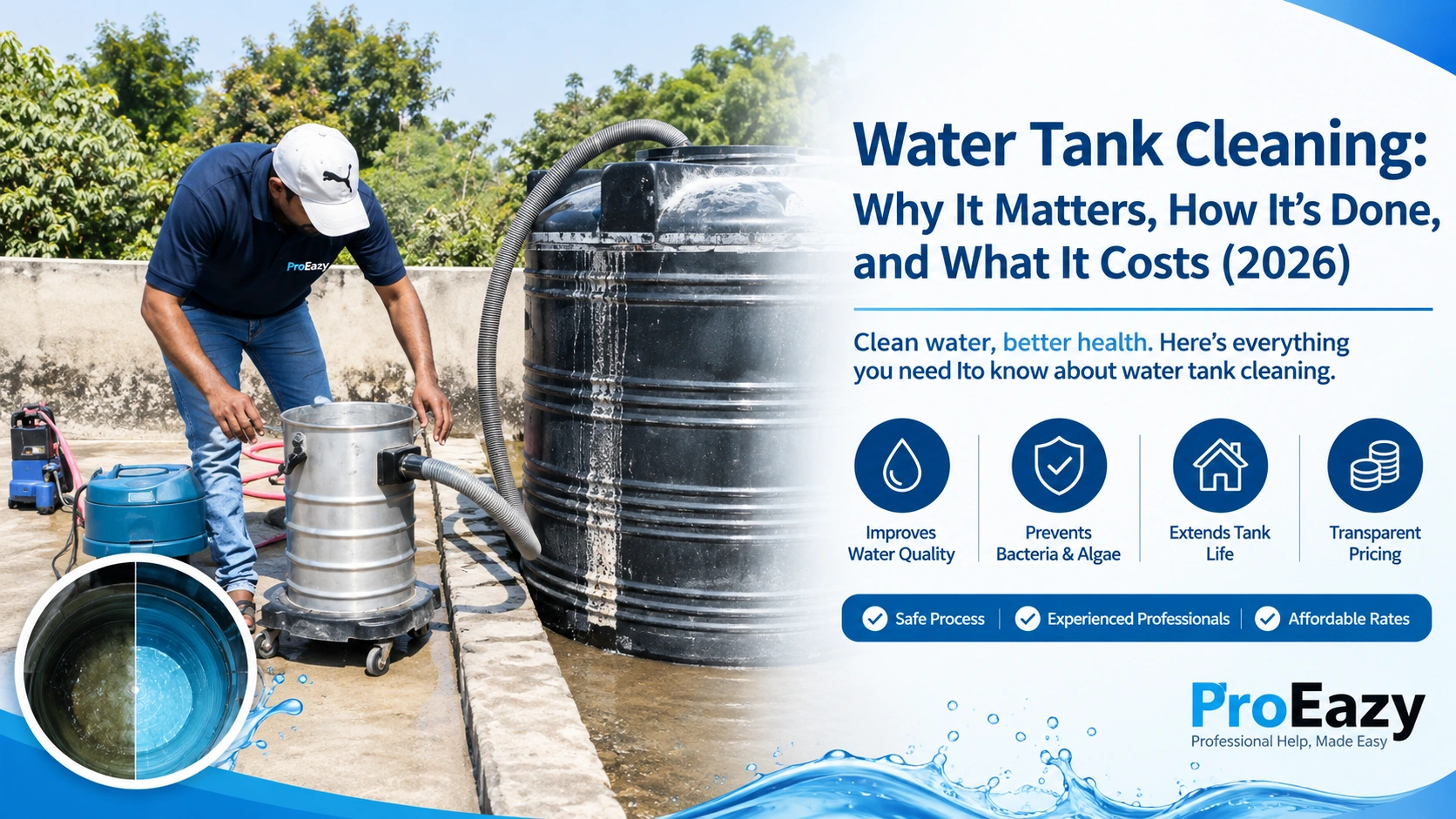
Professional water tank cleaning involves draining the tank, removing sludge and sediment, high-pressure scrubbing of the walls and floor, anti-bacterial disinfection, and refilling with clean water. A proper process reaches the contamination that surface rinsing leaves behind.
Here's how a professional clean usually runs, step by step:
That's why a professional clean beats a manual rinse: it handles the sediment, the surfaces, and the disinfection in one go.
Overhead tanks are more accessible and quicker to clean, while underground tanks and sumps are more involved because of their size, access, and confined-space safety, which is why they cost more. The type of tank shapes both the method and the price.
An overhead tank on the roof is easy to drain and reach, so the job goes fairly quick. An underground tank or sump is larger and harder to get into, and cleaning it safely needs proper equipment and precautions, which makes it a bigger job.
So when you book, it helps to know whether you've got an overhead or underground tank, since the two are priced differently for the work involved.
You can clean a small overhead tank yourself with care, but DIY tank cleaning carries real safety risks, including confined spaces, cleaning-agent fumes, and incomplete disinfection, so larger and underground tanks are safer left to professionals. It's worth being honest about the risks here.
A small, accessible overhead tank can be drained and scrubbed by hand, though getting to full disinfection without the right anti-bacterial treatment is hard. And entering a large or underground tank is genuinely dangerous: confined spaces trap fumes and carry serious safety risks, which is why that work belongs with trained professionals.
Minor overhead tanks may be fine for a careful homeowner. For anything large, underground, or where proper disinfection matters, a professional is both safer and more thorough.
Professional water tank cleaning is worth it because it reaches the sediment and surfaces a manual rinse can't, disinfects the tank properly, and gets done safely with the right equipment. The value is in the thoroughness and the safety.
A professional clears the settled sludge, scrubs and pressure-cleans the surfaces, and applies an anti-bacterial treatment: a full process that genuinely restores water quality. They also handle the confined-space safety that makes underground tanks risky to do yourself. For homes and housing societies alike, that makes professional cleaning the practical call for safe, hygienic water storage.
Water tank cleaning starts from ₹449 per overhead tank and ₹999 per underground tank, with the final price depending on tank size, type, and condition. You see the cost upfront, before you book.
Water tank cleaning pricing:
| Service | Price range |
| Overhead Water Tank Cleaning | ₹449 to ₹899 per tank |
| Underground Water Tank Cleaning | ₹999 to ₹1,999 per tank |
Where you land in each range comes down to size and condition: a larger or heavily soiled tank sits at the higher end. For a wider view of home cleaning costs, see our guide on how much does deep cleaning cost in Noida.
You can book professional water tank cleaning through ProEazy in under 2 minutes, with the price shown upfront and Aadhaar and PAN verified professionals. It's a quick process, and it's available across the cities ProEazy serves.
ProEazy runs water tank cleaning across Mumbai and the wider region. Book water tank cleaning in Mumbai directly, with the same service in Pune, Navi-Mumbai, and Nagpur. Every professional is one of ProEazy's verified home service professionals, Aadhaar and PAN verified with a skill assessment before their first assignment, and payment is fully digital and secure.
The water you use every day is only as clean as the tank that stores it. A clean every 6 months clears out the sediment, algae, and bacteria that quietly build up, and keeps your stored water safe to drink, cook, and bathe with.
For a small overhead tank, careful DIY may be enough. For underground tanks, thorough disinfection and genuine peace of mind, a professional is the safer, more effective choice. Book a verified one, see the price upfront, and give your household the clean water it runs on.
Written by ProEazy Editorial Team — home services content specialists covering cleaning, pest control, and home maintenance for Indian households.
Book verified professionals for cleaning, pest control, catering & more — in under 2 minutes.
Book Now →